Wax or Laser Hair Removal

Wax or Laser Hair Removal – Which is Better for Unwanted Hair?

Wax or Laser Hair Removal

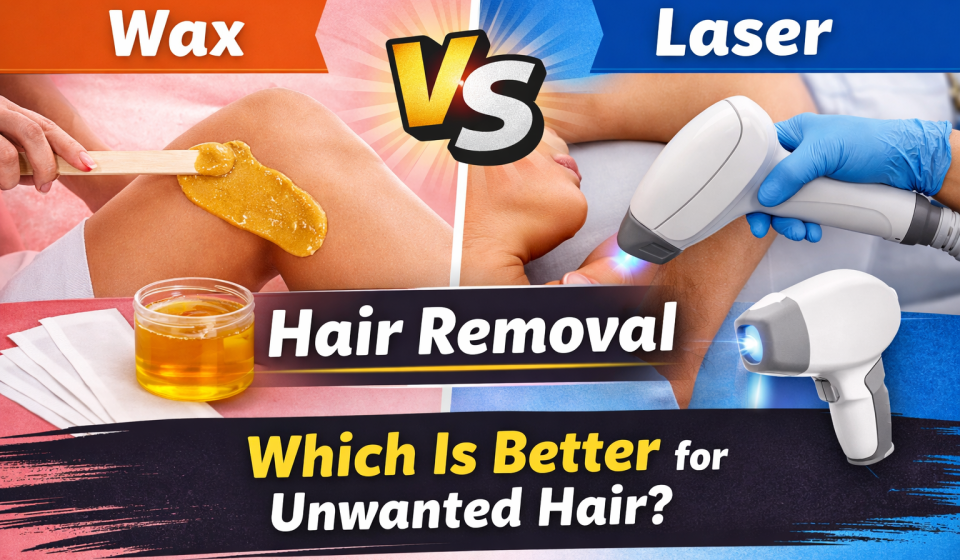
Wax or laser hair removal are two of the most popular methods for removing unwanted hair. The main difference is that waxing removes hair temporarily from the root, while laser hair removal targets the hair follicle to deliver long-term, permanent hair reduction.

Choosing the right hair removal method depends on your goals, lifestyle, pain tolerance, and desire for long-lasting results.


What Is Waxing? 

Waxing is a temporary hair removal method that removes hair from the root using warm or cold wax.
Results last 3–6 weeks, after which hair grows back and requires another session.

How Waxing Works

Waxing involves applying wax to the skin, allowing it to bind to the hair, and then quickly removing it to pull hair out from the root.

Types of waxing include:

  • Soft wax: Uses cloth strips; ideal for legs and arms

  • Hard wax: Removed without strips; better for sensitive areas like the bikini line and face

Waxing provides instant smoothness but requires ongoing maintenance.


What Is Laser Hair Removal? 

Laser hair removal is a long-term hair reduction method that uses laser energy to damage hair follicles and prevent future growth.
It typically results in 90–95% permanent hair reduction after completing a treatment series.

How Laser Hair Removal Works

Laser hair removal uses concentrated light to target melanin in the hair follicle. The heat damages the follicle without harming surrounding skin.

Because hair grows in cycles, 6–8 sessions are usually required for best results.


Wax or Laser Hair Removal: Key Differences (Comparison Table)

Feature Waxing Laser Hair Removal
Results Temporary Permanent reduction
Duration 3–6 weeks Long-term (90–95%)
Pain Level High Mild to moderate
Ingrown Hairs Common Significantly reduced
Maintenance Ongoing Minimal
Cost Over Time Higher Lower long-term
Best For Temporary needs Long-term solution

Which Is More Painful: Wax or Laser Hair Removal?

Waxing is generally more painful than laser hair removal.

  • Waxing causes sharp pain because hair is pulled from the root

  • Laser hair removal feels like a rubber band snapping on the skin

  • Modern lasers include cooling technology to reduce discomfort

  • Laser becomes less painful over time as hair grows thinner


Wax or Laser Hair Removal: Results and Longevity

How long does waxing last?

Waxing lasts 3–6 weeks and requires continuous appointments.

How long does laser hair removal last?

Laser hair removal provides permanent hair reduction, with most people experiencing 90–95% reduction after treatment.


Time and Lifestyle Comparison

Waxing

  • Requires visits every 3–6 weeks

  • Hair must grow before each appointment

  • Visible stubble between sessions

Laser Hair Removal

  • Requires 6–8 initial sessions

  • Shaving allowed between treatments

  • No long-term maintenance cycle


Side Effects and Skin Health

Waxing side effects:

  • Redness and irritation

  • Ingrown hairs

  • Risk of burns and hyperpigmentation

Laser hair removal side effects:

  • Temporary redness or swelling

  • Reduced ingrown hairs

  • Safer long-term skin outcome when performed professionally


Who Should Choose Waxing vs Laser Hair Removal?

Waxing is best if you:

  • Have very light hair (blonde, gray, white)

  • Need immediate results for an event

  • Prefer temporary hair removal

Laser hair removal is best if you:

  • Want permanent hair reduction

  • Have dark hair

  • Experience ingrown hairs or sensitive skin

  • Want fewer appointments long-term


Final Verdict: Wax or Laser Hair Removal?  

Laser hair removal is the better long-term solution for unwanted hair.
While waxing offers temporary smoothness, laser hair removal delivers lasting results, fewer appointments, reduced ingrown hairs, and improved skin health over time.


Frequently Asked Questions 

1. Is wax or laser hair removal better for unwanted hair?

Laser hair removal is better for long-term results, offering 90–95% permanent hair reduction, while waxing is temporary.

2. Which method lasts longer: waxing or laser?

Laser hair removal lasts significantly longer, with permanent reduction after treatment, while waxing lasts only a few weeks.

3. Can I shave between laser hair removal sessions?

Yes. Shaving is recommended between laser sessions. Avoid waxing or plucking.

4. Does laser hair removal work on all hair colors?

Laser works best on dark hair. Waxing works on all hair colors.

5. Is laser hair removal safe for sensitive skin?

Yes. Laser hair removal is often better for sensitive skin than repeated waxing.

demo-attachment-1128-op_atikh-bana-zPFws4toKhg-unsplash-1-scaled

Waxing And Other Forms Of Hair Removal

Waxing is the process of hair removal from the root by using a covering of a sticky substance, such as wax, to adhere to body hair, and then removing this covering and pulling out the hair from the follicle. New hair will not grow back in the previously waxed area for four to six weeks, although some people will start to see regrowth in only a week due to some of their hair being on a different human hair growth cycle. Almost any area of the body can be waxed, including eyebrows, face, pubic hair (called bikini waxing), legs, arms, back, abdomen, knuckles, and feet. There are many types of waxing suitable for removing unwanted hair.

Strip waxing (soft wax) is accomplished by spreading a wax thinly over the skin. A cloth or paper strip is applied and pressed firmly, adhering the strip to the wax and the wax to the skin. The strip is then quickly ripped against the direction of hair growth, as parallel as possible to the skin to avoid trauma to the skin. This removes the wax along with the hair. There are different forms of strip waxing or soft waxing: heated, cold or pre-made strips. Unlike cold waxing, heated wax is spread easily over the skin. Cold waxing is thicker, which makes it more difficult to spread smoothly over the skin. Pre-made strips come with the wax on them, and they come in different sizes for different area uses.

Stripless wax (as opposed to strip wax), also referred to as hard wax,is applied somewhat thickly and with no cloth or paper strips. The wax then hardens when it cools, thus allowing the easy removal by a therapist without the aid of cloths or strips. This waxing method is very beneficial to people who have sensitive skin. Stripless wax does not adhere to the skin as much as strip wax does, thus making it a good option for sensitive skin as finer hairs are more easily removed because the hard wax encapsulates the hair as it hardens. The stripless waxing method can also be less painful.